In times of uncertainty, businesses often ask themselves: is it worth investing in production now, or is it better to wait? Most often, such questions arise regarding projects that require significant investments - for example, building a factory. The key question: how not to lose investments due to external risks. My position is pragmatic: businesses are primarily consumers of specific products of appropriate quality and properties, and the factory is only a tool. An enterprise can manufacture products both at its own production facilities and at third-party production facilities. Each model has its own advantages and limitations and risks. Therefore, whether to produce itself or buy is a question of strategy. At different stages of business development, companies must choose a model that meets their capabilities and minimizes risks. That is why investments in production are not only about building a factory, but primarily about risk management and long-term competitive advantage.
The Chinese factor: challenges and opportunities for Ukraine
Today, cheap Chinese goods are conquering the global market, but the question arises of the speed of deliveries, the stability of logistics and quality guarantees. In addition, China is in a zone of geopolitical uncertainty. In the event of increased tension, the risks of disruption of logistics chains increase, and businesses may find themselves trapped in the trap of dependence on a single source of supply.
For many companies, this can become a critical risk. On the other hand, businesses that control their own production or have diversified sources of supply gain a strategic advantage.
Having their own production provides flexibility: it allows you to introduce innovations faster, adapt products to the requirements of different markets and export. In the modern world, a cheap product no longer guarantees a stable business. Stability provides control over technology, quality and the supply chain.
Ukraine has a number of competitive advantages - primarily a resource base, especially in the agricultural sector, and a qualified workforce. At the same time, when planning to enter international markets, businesses need to take into account the regulatory and cultural requirements of the countries to which their products are supplied.
Under such conditions, Ukraine can become an alternative production site for Europe. But for this it is important to move from a raw material model to deeper processing with high added value. This also means the need to meet high standards of product quality and safety, systematically work on reputation and take into account that ESG is increasingly becoming an important factor in choosing a supplier for European partners.
Construction as a strategy: how to preserve investments in conditions of uncertainty
The history of the project to build an innovative plant Enzym Group began with an analysis of key challenges long before its implementation. The global yeast market is shrinking by 3–5% every year. Firstly, modern technologies allow using less yeast. Secondly, consumer habits are changing - people are baking at home less and less. In addition, the population of Ukraine is decreasing every year.
In these conditions, we looked for opportunities to grow in new segments and create products with higher added value, relying on our experience in fermentation technologies. The choice fell on the advanced processing of yeast to obtain derived products, in particular yeast extracts. We saw an increase in demand for natural ingredients that allow us to shape the flavor profiles of food products. Few companies in the world produce such products - these are mostly large biotechnology players.
At the same time, the technologies for producing yeast extracts and other derived products are complex, often patented and not publicly available. Therefore, the first step was to create our own R&D laboratory. We began to study the properties of the yeast cell and work on developing our own technology. This was the prerequisite for the decision to build our own plant.
At first, the project looked like a typical engineering process: we analyzed supplier offers, pre-selected equipment, and visited international manufacturers' exhibitions to optimize the budget without losing quality. Since Ukraine lacked experience in technological engineering for such products, we involved international partners. The project was implemented comprehensively: an international company was responsible for design and commissioning, a local partner adapted the solution to Ukrainian standards, and a general contractor coordinated construction.
When a full-scale war broke out in February 2022, the project stopped for only four weeks. We resumed construction in March. This was a strategic decision, both in terms of preserving investments and from the team's point of view.
The biggest challenges arose during the launch. Due to security risks, foreign experts refused to come to Ukraine. In fact, the only option left was remote support. For several months, the team worked with foreign engineers remotely: they configured and tested the equipment in a "cold" launch. Solutions were tested on small test batches to ensure that production met the required quality standards.
This experience taught us an important lesson: investment projects need to be approached with different scenarios in mind. If a project is critically dependent on one person or one external partner, you always need to have a “plan B”.
Sustainability and efficiency: the foundation of competitiveness
It’s one thing to build a plant, another to do it right. In modern business, competitiveness is impossible without high operational efficiency, and it requires a systematic approach. In leading global companies, efficiency is part of the corporate DNA. For example, the Japanese system of continuous improvement Lean Total Productive Maintenance is not just a methodology, but an element of a management model that allows you to balance the speed of processes and stable product quality.
Key focuses of Lean TPM:
· reducing cost through systematic cost reduction;
· reducing the carbon footprint through the economical use of resources;
· reliable operation of equipment to guarantee product quality and avoid downtime.
In practice, Enzym Group works by involving the entire team. Improvements are initiated not only at the management level, but directly at the workplace. Cross-functional teams work on priority initiatives in the areas of energy efficiency, occupational safety and cost control every year.
Internal efficiency is becoming the basis of sustainable development. The ESG approach, which encompasses environmental, social and governance principles, is now actually an “entry ticket” to international markets. EU regulatory policy is strengthening: large European manufacturers expect suppliers not only to provide a quality product, but also transparency of processes, calculation of the carbon footprint and compliance with sustainability standards.
The Lean approach helps not only to increase efficiency, but also to make processes more transparent and environmentally responsible. If a company seeks to work with global customers, it must meet these standards.
Investment in production creates the opportunity to compete, but it is efficiency that determines whether a business will be able to maintain this position in the global market.
The role of the state: guarantees of experience transfer and centers of competence
When we talk about development, we mention education - and this is right, but today business needs quick and specific solutions. At one time, Japan actively used American and European technologies and attracted foreign specialists for technological breakthroughs. Only after reaching a certain level of development, the country was able to provide education that meets the needs of business.
In conditions of martial law, the state could provide something that an individual Ukrainian enterprise cannot do - guarantees in the form of insurance for foreign experts who come to transfer knowledge. This is critically important, because their visits do not guarantee their companies due to security risks. In fact, these companies already have experience in creating specialized platforms based on enterprises with the involvement of foreign experts. After all, by working with world experts, Ukrainian engineers gain unique knowledge, and enterprises become centers of competence. This is one of the ways for Ukraine to stop being just a supplier of raw materials and become a full-fledged player in the world market.
Experts
News
Apr 9, 2026
How Enzym Group built the innovative Linkcell plant: key challenges and experience
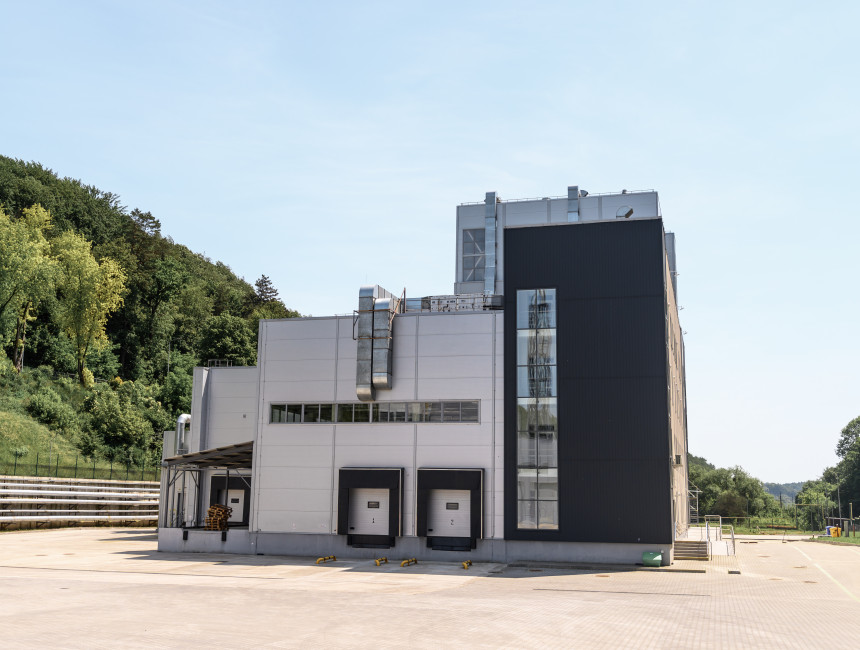
This was told by the CEO of our company, Andriy Tsegelyk, for the publication Economic Truth, explaining how to preserve investments in conditions of uncertainty.
More News

Social
News
Charitable initiatives, Ukraine's Independence Day and practices in biogas production – August news at Enzym Group
In August 2026, Enzym Group joined various initiatives and more. Read our news in more detail.
Sep 1, 2026

Ecology
Experts
News
Approach to building an ESG strategy, KMBS visit, new vacancies and a professional test in production – July news at Enzym Group
We will tell you in more detail what happened in the company during the month.
Aug 3, 2026

News
Enzym Group celebrates 32 years
On July 7, Enzym Group celebrates its 32nd anniversary. During this time, the company has evolved from a manufacturer of baker's yeast to a business developing biotech solutions for the food and feed industries, and continues its transformation into a global biotech company.
Jul 7, 2026

Experts
Social
News
Awards, educational partnerships and 10 years of R&D center – Enzym Group news in June
In June 2026, representatives of the Ukrainian ethnic clothing manufacturer Svarga visited us to learn from their experience in organizing production processes.
Jul 1, 2026

News
Co-owners of Enzym Group and Kormotech Olena Vovk and Rostyslav Vovk entered the rating "UP-100. Business"
The award ceremony in 2026 is dedicated to the 20th anniversary of Economichna Pravda. The participants of "UP 100. Business" are not the largest or richest companies in their industries, but entrepreneurs who have proven by their own example: in Ukraine you can do business honestly, achieve success, and make a significant contribution to the development of the state.
Jun 17, 2026
